How Sincerity™ Detection is Revolutionizing Virtual Hiring
Virtual interviews have revolutionized recruitment, enabling companies to connect with global talent while reducing costs and streamlining hiring processes. However, this digital shift also introduces challenges, particularly in assessing candidates' authenticity during screen-mediated interactions. Ensuring integrity in hiring has become a top priority for HR teams, as the rise of remote work creates new opportunities for virtual deception.
This guide delves into how AI sincerity detection is transforming virtual hiring, addressing these challenges with precision. We’ll explore the types of deception AI can uncover, the technology behind it, and how organizations can integrate these tools to make smarter, fairer hiring decisions.
Why AI is Essential in Virtual Hiring
Virtual interviews offer unparalleled convenience and flexibility, but they also open the door to dishonest practices. Candidates may exploit the remote setting to misrepresent themselves, rely on off-camera assistance, or even use impersonators. Studies show that 80% of candidates admit to embellishing or lying during interviews, making it increasingly difficult for hiring managers to accurately assess applicants.
Moreover, humans struggle to detect deception, especially in video-based interviews where non-verbal cues are limited. For HR teams managing high-volume recruitment or building remote-first teams, these challenges can undermine hiring quality, ultimately impacting growth and productivity.
The Most Common Forms of Virtual Interview Deception
AI sincerity detection tools are designed to tackle the most prevalent forms of dishonesty in virtual interviews, including:
Candidate Impersonation: Perhaps the most serious form of fraud, impersonation occurs when someone other than the applicant participates in the interview. This often involves coordinated efforts that are hard to detect without verification tools.
Off-Camera Assistance: Candidates may use hidden resources, such as someone feeding them responses or teleprompters, to guide their answers.
Secondary Device Usage: Using another device to look up answers during technical or behavioral questions is a common tactic to gain an unfair advantage.
AI-Powered Responses: Some candidates rely on AI tools like chatbots or text generators to craft polished answers that don’t accurately reflect their skills or experience.
How AI Detects Deception in Virtual Interviews
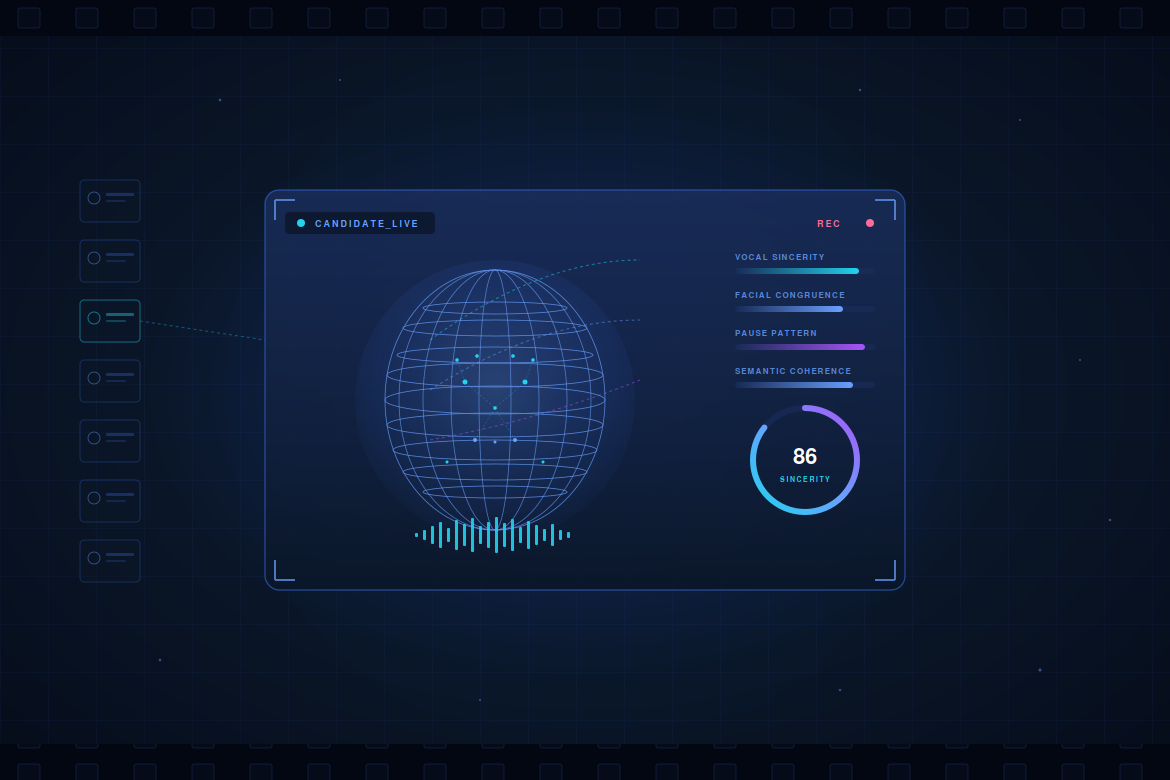
AI sincerity detection utilizes advanced technologies to analyze behavioral and verbal cues in real-time, providing deeper insights into a candidate’s authenticity. Here’s how it works:
Voice Pattern Analysis: AI detects stress, hesitation, and speech inconsistencies, providing insights that surpass what human interviewers can perceive.
Facial Expression Recognition: Using computer vision, AI identifies subtle micro-expressions and eye movement patterns that may indicate stress or deception.
Behavioral Signal Processing: By evaluating nonverbal behaviors, such as engagement levels, response timing, and confidence markers, AI provides a comprehensive assessment of sincerity.
This multimodal approach enables AI tools to spot patterns and inconsistencies with remarkable accuracy, minimizing the risk of overlooking red flags.
The Benefits of AI in Virtual Hiring
Beyond identifying deception, AI sincerity detection enhances the hiring process in several meaningful ways:
Reducing Bias: Unlike human interviewers who may be influenced by unconscious biases, AI evaluates candidates based on objective data, promoting fairer hiring decisions.
Consistent Assessments: AI applies uniform criteria to all candidates, eliminating variability and ensuring a level playing field.
Improved Candidate Trust: Transparency about AI’s role in the hiring process can build trust, as candidates appreciate data-driven fairness over subjective evaluations.
How to Integrate AI Sincerity Detection into Your Hiring Process
Adopting AI tools for virtual hiring can be seamless with the right steps:
Select the Right Tool: Choose an AI platform that integrates with your existing video conferencing tools, such as Zoom or Microsoft Teams.
Be Transparent with Candidates: Inform applicants that AI will be used and explain how it promotes fairness and objectivity.
Conduct Interviews as Usual: Run interviews normally while AI analyzes verbal and behavioral cues in the background.
Review Insights: After the interview, access detailed sincerity scores and behavioral data to guide your hiring decisions.
Addressing Challenges in AI Adoption
While AI tools offer significant advantages, they are not without limitations. To ensure effective implementation, consider the following:
Training for Recruiters: Human judgment remains vital. Train your team to effectively interpret AI-generated insights and utilize them in conjunction with traditional evaluation methods.
Contextualization: Factors such as cultural differences, interview anxiety, or technical issues can impact AI results. Establish clear guidelines for interpreting these insights in context.
Privacy and Ethics: Ensure compliance with data privacy laws and maintain ethical standards by securing consent from candidates and implementing robust data protection measures.
Measuring the ROI of AI in Recruitment
To assess the impact of AI-powered tools on your recruitment process, track these key metrics:
Time-to-Hire: Measure the efficiency of identifying and onboarding qualified candidates compared to traditional methods.
Quality of Hire: Evaluate whether AI-assisted hires meet or exceed performance expectations over time.
Cost Savings: Track reductions in recruitment, turnover, and training expenses.
Additionally, monitor long-term employee engagement, retention rates, and career progression to gauge the sustained benefits of AI-driven hiring.
The Future of AI in Recruitment
As AI technology advances, we can expect even more sophisticated tools to emerge, including:
Real-Time Feedback: AI systems that guide interviewers during live sessions, suggesting follow-up questions or flagging areas of concern.
Cultural Fit Analysis: Tools that evaluate not just skills but also alignment with company values and team dynamics.
Predictive Success Models: Algorithms capable of forecasting a candidate’s future performance and growth potential based on behavioral patterns.
Key Takeaways
AI sincerity detection is revolutionizing virtual hiring by addressing the challenges of remote interviews with unprecedented precision. By leveraging advanced technology, these tools enhance accuracy, reduce bias, and improve consistency, enabling organizations to make well-informed hiring decisions. As AI continues to evolve, its role in recruitment will only grow, shaping the future of talent acquisition in a remote-first world.